The Belonging test
are you a Canadian?
What makes Canadians, Canadians? Is it skin colour? Is it how well you speak English or French? Is it how well you adapt to the weather? Is it how much effort you put into to fit in the economy? Is it how many generations your family has lived here? How many uncles and aunts you have in the country? Or does being Canadian mean something else beyond the stereotypes?

the foundation of our polices and political conduct
What We Believe are Uniquely Canadian Values
While many nations share commitments to democracy, freedom, human rights, and the rule of law, we believe Canada’s history, geography, and circumstances have shaped a distinct set of values that define our national character. (Australians may respectfully disagree, as we both share similiar but not the same conditions.)
The Value of Work with
the Sense of Freedom
North America is a relatively young civilization, emerging at a time when human civilization had already reached an advanced stage. Every thriving civilization depends on the willingness of its capable citizens to contribute to its maintenance and defence. After all, apart from nature itself, it is people who build—or break—a civilization. Yet a civilization loses its purpose and becomes self-serving when its citizens can no longer meaningfully enjoy the fruits of their labour. True freedom includes not only the obligation to contribute, but also the right to benefit from one’s effort.
The Sense of Freedom with
the Obligation of Responsibility
At the meta level of our existence, Life is an untameable force. It goes where it can, stays where it can, and departs when it must. Humans inherit this sense of freedom—the desire to remain unbound, even by nature. Yet we do not live in the wild, but in societies shaped by civilization. Living in a society means participating in it or, at the very least, respecting its laws, norms, and shared obligations. In the human context of society and civilization, freedom cannot be understood in isolation. It exists as one half of a duality, balanced by responsibility. Without responsibility, freedom loses its meaning; without freedom, responsibility becomes oppression.
The Obligation to the Self
within a Social Context
Every individual — whether a child or an adult, except the completely incapacitated — has a fundamental duty to develop their own potential, character, and capabilities. This personal obligation is the foundation of human dignity and self-respect. At the same time, every person must recognize that they live within a larger society that both supports them and depends on their contribution. It is the obligation of the self to strive, to work, to learn, and to take responsibility for one’s own life. However, it is also the obligation of a healthy society to support those who are genuinely helpless or facing circumstances beyond their control. True civilization strikes a balance: it demands personal responsibility from those who are capable, while offering compassionate support to those who cannot care for themselves. This dual obligation — personal striving and societal care — creates a healthy social context. When individuals fulfill their duty to themselves and to the collective, civilization advances. When either side fails, disorder and decline follow.
Social Context as the Essence of Order — and Order as the Pinnacle of Civilization
There are two fundamental ways of living: wild or civilized — or some chaotic combination in between. Humans not only can, but should live in civilization rather than in the wild. This is because of humanity’s unique potential to advance life itself, even to the farthest corners of the universe. For this potential to be realized, the protection of civilization must be paramount. Order, therefore, becomes the pinnacle of any civilization — the foundation through which both society and its individual members can thrive, live long, and live well. The key difference between us and the Conservatives is our approach to order. Conservatives often rely on force to impose order. We believe humans cannot be tamed or conquered by coercion — such attempts only breed resentment and destruction. Instead, our approach is rooted in social context: we seek to nurture individuals, families, and communities, thereby strengthening society and civilization as a whole.
Thus, we named ourselves,
The Justice Party of Canada
Ideally, politics should be about policies and people. Yet, increasingly, it has become a pursuit of power at any cost. Perhaps the problem begins with the names themselves. “Liberal” and “Conservative” have become labels detached from their original meanings. Liberalize what? Conserve what? They have gradually come to represent simplistic ideas of being “open” or “closed”—an open cheque book or a closed mind. Without a clear purpose, or more importantly, without a principled philosophy, political labels become symbols of contemporary identity rather than guiding principles for the governance of a larger society.
Justice is the foundation upon which freedom, responsibility, and civilization stand. Without justice, freedom becomes the privilege of the powerful, responsibility becomes an unequal burden, and civilization loses its moral foundation. Justice creates the balance between individual rights and collective obligations—the principle that allows people to live together with dignity, fairness, and purpose. Politically, this philosophy will guide our policies and actions, ensuring consistency, integrity, and predictability. Through this, we aim to earn the trust and confidence of the people.
Thus, we named ourselves the Justice Party of Canada.
One last piece
On Canada and Multiculturalism
If civilization is the crux, order is its pinnacle, and work, freedom, and responsibility form the pillars of society, then where does “multiculturalism” fit in? We must ask this question honestly, because the term is heavily loaded with politics and it affects both immigrants and the native population. It creates both hopes and frustration — hence it is a double-edged sword.
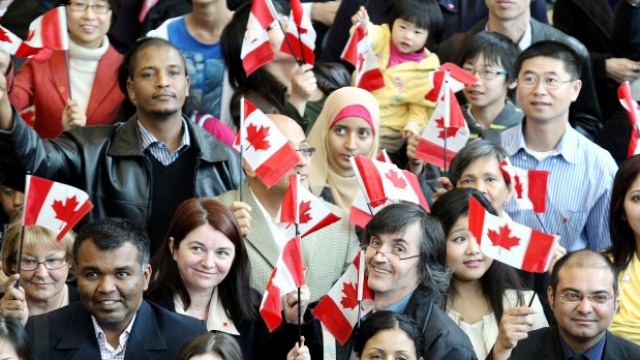
canada needs people
no doubt about it
There is no serious doubt about this. Canada is vast, our fertility rate remains below replacement level, and our population is aging rapidly. Sustained immigration and population growth are demographic and economic necessities. Without them, we cannot maintain a strong workforce, fund public services, or support an aging society. Canada’s size and future potential require more people to build, contribute, and sustain the nation.
bringing people also brings friction socio-economicaly
People bring more than skills and labour; they bring values, expectations, cultural norms, and different experiences. These differences can create real tensions. Competition for housing, jobs, schools, and services intensifies. Views on law, family, gender, and personal responsibility may conflict. These pressures affect both newcomers and long-time Canadians. Ignoring these challenges does not create harmony—it allows frustration and resentment to grow on all sides.
The Goal Must Be to Reduce Friction, Not take sides
Canada should reject both forced assimilation that erases heritage and a form of multiculturalism that treats the host society’s values as optional. Neither extreme creates lasting trust, cohesion, or a shared sense of belonging.
The practical approach is balance. We must reject vague, feel-good slogans like “welcome” and “acceptance” and speak plainly about openness, patience, understanding, and finally tolerance. People are often deeply habituated to their cultures and customs—frequently through no choice of their own and shaped by the societies in which they were raised. We do not judge people for the backgrounds they come from, but we must clearly demonstrate how society functions in Canada and what is expected of those who choose to become part of it. Integration requires both respect for individual heritage and commitment to the common civic framework. Adaptation is not optional; it is the foundation of integration.
The Solution Is a Clear Balance Between Host and Guest
First, it is about the words and the message. Just as we should avoid the vague slogan “welcome,” we should also reject inflammatory terms like “deport” or “remigration.” Those words often come from deeply frustrated Canadians who do not know how to address the issue with delicacy, effectiveness, or nuance. For some, nuance serves no purpose in life.
Second, we must actively promote core Canadian values. We begin with the essentials: zero tolerance for child abuse, domestic violence, discrimination, and violations of basic community standards such as bylaws and traffic laws. From there, we move to the more difficult, “hot potato” issues — such as Palestine or Khalistan. On these topics, we clearly outline Canada’s supportive positions and restrictive limits, just as we do on every other issue. Expression is allowed, but civil behaviour is expected.
ssssssss
ONE LAST PIECE
On Multiculturalism
If Civilization is the crux , order is the pinnacle, and work, freedom, and responsibility becomes its pillars of society, where does “multiculuralism” fit in? We have to ask this question because it is heaily loaded with politics.
culture is hard to control
Culture is a “choronomorph” Meaning, culture i snot static and changes with time. Perhaps the visual aspects of remain same like an outer shell, but the behavorial aspect of culture changes
Celebrating Our Heritage
With a history of welcoming immigrants and refugees, Canada has become a mosaic of cultures and backgrounds.
United in Diversity
By promoting and protecting multiculturalism, we are not only accepting diversity, but we are also embracing it as a source of strength and unity.
Growing Together
Together, we can continue to build a more prosperous and inclusive Canada for future generations.